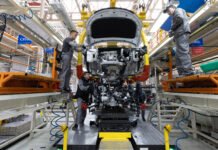
Visit an aircraft maintenance center in the present day and you will discover something new. In addition to toolkits and machinery, tablets, diagnostic software, and digital dashboards are also present that will direct all the steps. Aviation is not simply mechanical any longer, but more digital.
To students who are joining this space, this change is not merely an upgrade; it is a change in the manner maintenance is conducted, monitored and managed. This is the point by which Aircraft Maintenance Engineering meets the technology in a significant manner.
When Data Becomes a Decision Tool
Planes now produce large volumes of data with each flight. The sensors track the engine performance, system efficiency, and health of the components in real-time. This information is then processed to come up with trends and forecast possible challenges. Engineers are now able to predict a problem rather than waiting till it manifests itself.
This is also known as predictive maintenance and is transforming the way the industry is conducted. It enables maintenance teams to be proactive and minimize downtime and enhance safety. Students who are introduced to these ideas, sometimes in learning ecosystems inspired by the College Of Aeronautical Engineering, start to realize that modern maintenance is more about working with data than with equipment.
The Digital Workflow: The New Replacement Of Manual
Historical maintenance used to be relying on manual documents and physical examination. Although these are still crucial, digital tools have brought efficiency and accuracy at a new level. The engineers are now capable of accessing the maintenance histories in real time, updating records and working across teams in a better way. In Aircraft Maintenance Engineering, this change has enabled operations to become straight forward and made it less likely that there would be human mistake in documentation and analysis. Nonetheless, it also comes with new expectations.
Now, engineers have to feel at ease with software, learn how to interact with digital interfaces, and analyze the outputs of analysis. This mix of digital and technical is what makes the modern professional.
Building Future-Ready Skills
To students, it is necessary to adjust to this digital transformation. It involves readiness to study not only in the conventional way, but also to adopt new tools. It also underlines the need of constant learning. Aviation technology is changing fast and engineers are expected to keep up with changes in order to be effective.
The profession of Aircraft Maintenance Engineer now requires practical skills, as well as computer skills. Individuals who are able to integrate these skills will be in a better position to be ready in the future.
The significance of this Evolution
The incorporation of digital tools is not only efficiency but also the matter of improved safety and reliability. Using data and technology, maintenance teams will be able to make more effective decisions and see fewer risks. This is an exciting prospect to students. It enables them to be in an industry that is transforming and advancing. Digital technologies are transforming the process of aircraft maintenance in a way that would have been impossible to imagine ten years ago. To future engineers, this change is what they need to comprehend and accept so as to have a successful and future-oriented career in the aviation industry.